Content Marketing in Spanish: How Can it Help your SEO?

Content Marketing in Spanish and SEO

Delivering content that best serves the needs of users is top-of-mind for many SEOs. It is well known that good content helps search engines to find you, but do you know how to do it well?.  Read this article by Moz, and learn how to use Content Marketing in Spanish for SEO Growth.

Content Marketing in Spanish: How Can it Help your SEO?

The first point to remember when creating content in spanish for SEO Growth is that not all of your audience’s content needs are captured in search. This is a big problem with solely using keywords to drive your content strategy, because keyword research can tempt you to develop content that your brand really shouldn’t be creating because you don’t have anything unique to say about it.

Audience Focused Content Strategy

Moving away from a keyword-first-driven content strategy and into an audience-centric one will put you in a better place for creating SEO content that converts.  A good content marketing in spanish strategy starts with the target audience and dives deeper into understanding your brand’s expertise and unique value proposition.

Unique Content Angle

The key to connecting with your audience is to develop your unique content angle that finds intersections between what your brand’s expertise is in and your audience’s pain points. This is usually refered as a “content tilt” because it involves taking a larger topic and tilting it in your own way. This way you will be able to stand out from your competitors.

How to Build your Content Marketing in Spanish Strategy?

1. Set your goals.

Start at the end. What is you are ultimately trying to accomplish with content marketing in spanish? Do you want to increase leads by a certain percentage? Do you want to drive a certain number increase in sales? Are you trying to drive subscribers to a newsletter? Document these goals first. This will help you figure out what type of content you want to create and what the calls-to-action should be.

2. Identify your primary audience and their pain points.

The next step is to identify who you’re targeting with your content marketing in spanish. There are a lot of people at your disposal to help you with this part of the process. Within your organization, consider talking to different teams. Find out what your audience is struggling with and what content could be created to help answer their questions. Forgetting about their interest is one of the reasons why content strategies usually fail.

3. Determine your brand’s unique expertise.

Again, dig deeper and figure out what makes your brand truly unique. It likely isn’t the product itself. Think about who your subject matter experts are and how they contribute to the organization. Think about how your products are developed.

4. Figure out your content tilt.

Now put your answers for #2 and #3 together and figure out what your unique content angle will look like.

5. Develop a list of potential content topics based on your content tilt.

It’s time to brainstorm topics. Now that you know your content tilt, it’s a lot easier to come up with topics your brand should be creating content about. Plus, they’re topics you know your audience cares about!

6. Conduct keyword research.

Now that you’ve got a list of good content topics, it’s time to really dive into long-tail keyword research and figure out the best keyword targets around the topics.

7. Create an editorial calendar.

Based on your keyword research findings, develop an editorial calendar for your content marketing in spanish strategy. Make sure to include what your keyword target(s) are so if you have someone else developing the content, they know what is important to include in it.

8. Determine how to measure success.

Once you know what content in spanish you’re going to create, you’ll need to figure out how you’ll measure success depending on your fucus.

9. Create content!

Now that all the pieces are there, it’s time to do the creation work. This is the fun part! With your content tilt in mind and your keyword research completed, gather the information or research you need and outline what you want the content to look like.

10. Track your growth.

Once you’ve created your content and launched it, like with any SEO work, you will have a lag before you see any results. Be sure to build a report or dashboard based on your content goals so you can keep track of the performance of your content on a regular basis.

Learn More

Find more about the best content strategies reading the best 5 Principles for Content Marketing in Spanish

If you want to improve your SEO using Content Marketing in Spanish, Contact Us, our Multilingual SEO Agency will create the right strategy for you. 

Did you like this article? Don’t forget to share it and check more content in our Twitter and LinkedIn accounts.

Atlanta SEO Tips to Rank your Articles High in Google

Atlanta SEO Tips to Rank your Articles Higher in Google
Blogging is a great way to start building traffic, acquiring new customers, and developing brand awareness. But unless your articles are ranking well in Google search, you’re not going to make much progress. This guide by Neil Patel will give you some Atlanta SEO Tips to help you get your content ranked higher in Google.

1. Optimize for Keywords

Keywords SEO

The first and perhaps most important part of your Atlanta SEO strategy is optimizing for the right keywords. You’ll need to conduct some research before writing and use the results as the basis for your content. It’s also a good idea to keep track of what keywords you want to rank for. I recommend running SEO experiments all the time to make sure you’re improving in the right areas.

Include the keywords in your title.

The first and most basic way to optimize for your keyword is to include it in the title. The closer you place it to the beginning of the heading, the more likely it is to rank high in Google’s results.

Include the keyword a few times in each article.

While keyword stuffing is an old Atlanta SEO technique that I don’t recommend, you should definitely include the keyword a few times in your article. Write for humans, not computers, but if there’s a natural opportunity to include the keyword, use it!

Include LSI keywords.

A more advanced technique for getting your articles to rank well in Google is using Latent Semantic Indexing (LSI) keywords. These are related terms that Google uses to determine the quality and breadth of the content you’ve written.

Include the keywords in H2 or H3 headings.

The best Atlanta SEO optimized articles are divided up into different sections under specific headings. To show Google that your article covers the keyword you’ve included, make sure to list this phrase in your subheadings.

2. Optimize your Content

Content Marketing

To make sure you stay on top of the search results page, you need to look beyond today’s tactics and focus on long-term strategies that will keep you on top of search results. The one constant in the ever-changing landscape of Atlanta  SEO is that Google will always rank in-depth, quality articles over sub par content. Relevant content creation is the most effective SEO tactic.

Increase length.

Despite the advice you’ve probably heard about blog readers wanting brief information, the truth is that the best-ranking articles in Atlanta SEO are long.

Improve readability

While Google values length, it also ranks content by how easy your content is to read. if you’re using complicated jargon that isn’t necessary for the industry or topic you’re writing about, it’s time to make things easier to read.

Update frequently.

To improve your article’s results in Google, you should update them frequently. All you need to do is make a few updates to the WordPress post, and Google will recognize the changes.

3. Technical Ranking Factors

Technical SEO Factor

While it’s easy to notice the visible factors that improve your rankings, there are other Atlanta SEO techniques to keep in mind, as well.

Make your URL keyword-rich and readable.

Most site owners just leave this alone, but you can take advantage of how Google and its users view your URL. Make your URLs stand out so Google can find the keywords in this URL.

Include a compelling meta description.

If you don’t provide a description for Google, it will show a random snippet of your article. Usually, this isn’t the kind of message you want to deliver to potential readers. Instead, you should create a custom phrase on the metadescription that shows up in the results.

Optimize your images

Even if you only have one or two images, you can easily optimize them for even better Atlanta SEO results. Before you upload an image, change the filename to a keyword that’s relevant to your content. For alt text, just write a brief description that explains what the image is in relation to your article.

4. Improve your Links

Link Building SEO

One of the strongest strategies for ranking with Atlanta off-page SEO is the links that lead to each of your articles.

Promote your content for backlinks.

The best way to get higher search engine rankings for your articles is to acquire a number of backlinks from other sources. An easy way to do this is to include links to others in your articles. When you include these links, let the owner of the site you mentioned know you’ve linked to him or her.

Do more internal linking.

The easiest and simplest way to improve the links to your articles is to do it internally. By doing this, Google can easily crawl your site and find the best content you have to offer.

Fix broken links.

If you have links that used to point to a great page that no longer exists, you should fix them as soon as possible, otherwise this will hurt your rankings.

Improve your anchor text.

Every clickable link says something. While it’s not a deal-breaker for Google’s ranking algorithm, it’s a good idea to give yourself the advantage of keyword-rich anchor text. This means that, instead of linking to articles with text like “this article” or “click here,” you use phrases.

5. Go Beyond Text

Voice Search SEO

As the Internet becomes based on more than just text, you can improve your Google search results by including more than just words.

Include social sharing buttons.

With the advent of social media, more and more people want to be able to share your content with their friends and others on their favorite social media channels. If you don’t have social sharing on your website already, it’s time to add it.

Embed different types of media.

I’d recommend including video, audio, pictures, and even special types of content. This can include calculators, tools, and other features.

Prepare for Voice Searches.

You should optimize your blog posts for voice search as soon as possible. To do this, you should include conversational keywords and phrases commonly used in voice search. This will make your content even more accessible to those who use voice for search, and it will improve your Atlanta SEO rankings both on mobile voice searches and on Google’s results in general.

Want more?

If you want to know more about how to improve your rankings, read the International SEO Consultant Guide to Rank for more insights.

Do you want to make your blog articles rank higher in Google? Contact Us, our Atlanta SEO Experts will plan the best SEO Strategy for you.

Did you like this article? Don’t forget to share it and follow us in Twitter and LinkedIn.

What Every Person Should Know About Marketing Tools

Marketing and IT Tools

With well over 1,000 technology vendors trying to sell some type of marketing technology in more than 40 categories, it’s no wonder that marketing specialists often describe themselves as feeling ‘overwhelmed’. For this reason it is important to reflect on what IT professional services and IT products are available to improve the sales and marketing funnel.

In this article by Tentfold there’s a look at the six most important things that every business leader should know about IT products and digital services that help with sales and marketing.

What Every Business Person Should Know About IT Sales & Marketing Tools

Utilize Email Marketing

When the Internet was still novel, the phrase ‘You’ve Got Mail’ brought squeals of joy and excitement. After decades of unsolicited spam piling up, Nigerian prince schemes, and assurances of undeserved wealth flooding the average inbox, how effective is email marketing? Is it still an effective approach to garnering sales?

The short answer is yes. With an effective email marketing campaign, the possibilities for growth are endless.

Stay connected

It’s common knowledge that many customers require several touchpoints with a company before committing to a purchase. Email marketing is an easy way to ensure this happens. To be sure, the majority of customers seek out email marketing campaigns to stay informed about their favorite businesses. Global information powerhouse Nielsen reported in 2014 that 28 percent of consumers subscribe to a company email list to stay informed about business activities.

Nearly 60 percent of moms in the United States reported to Loyalty 360 that they would sign up for email marketing if rewards were offered. And companies who do choose this route are often rewarded with increased sales and improved customer loyalty. In other words, there is a definite value in staying connected via email.

Easy integration

With the advent of IT marketing techniques and tools, email campaigns have an advantage: they are versatile enough to integrate seamlessly with most other marketing strategies. It is also an easy technique that can be used to personalize interactions with consumers. Business leaders who utilize personalization features available through modern IT see huge profit gains.

Inexpensive

Perhaps the most alluring of reasons to pursue email marketing stems from the fact that it is the least expensive IT solution available. For business owners on a budget, it can be a more effective and affordable option than direct mail, TV advertisements, or radio spots. While it is something many business owners struggle to find time for, hiring a marketing professional to undertake the process is also an option.

Engage in Analytics

The name alone suggests something far less attractive than other aspects of marketing and sales. However, it can save business leaders tremendous amounts of time and money. IT sales and marketing programs are readily available to track the performance of channels, ads, offers, and technologies.

Centuries ago, American merchant John Wanamaker said: “Half the money I spend on advertising is wasted; the trouble is I don’t know which half.” Fortunately, the time of uncertainty has passed. Now, smart marketers utilize information technology to know which half is (or isn’t) working. While there are a variety of tools and techniques available, by and far the most popular one is Google Analytics.

Over 80 percent of small to mid-size websites use Google Analytics, which is completely free. Down the road, business leaders may opt for a paid service such as Adobe Analytics, but Google Analytics provides a fantastic base service. Some of the information it provides includes:

  • The number of visitors to a site;
  • How visitors find a site;
  • Whether a mobile-friendly site would be useful;
  • Ways to improve a site’s speed;
  • What marketing techniques drive the most people to a site;
  • What blog content is most appealing to site visitors;
  • How many visitors have been converted into paying customers.

Serve Up a Dish of Artificial Intelligence

In 1983, moviegoers caught a glimpse of the potential Artificial Intelligence offers in the film “War Games.” In it, Matthew Broderick employed a software program to teach the futility of nuclear war through repeated games of Tic-Tac-Toe.

Machine learning is built on the same concept and has tremendous potential for the world of commerce. IT specialists are using it to form millions of data points regarding consumer shopping habits and preferences. With this information, businesses can offer much greater personalization to customers.

Consumers are ready and poised to respond to such sales and marketing personalization. According to Oracle Retail 2025, just under 60 percent (three out of five) of shoppers had a positive outlook about a grocer creating a suggested shopping list based on the consumer’s previous shopping habits and behaviors.

For an AI system to be effective, it must provide minimal intervention in a person’s life while maximizing the amount and quality of data provided. As customers interact with the software, more information is then gathered about their shopping habits so that even more personalization is possible.

Employ Marketing Automation & CRMs

Smart marketers understand that ad hoc advertising tools can be useful. However, an all-in-one automated marketing platform is far more beneficial. It allows companies to bring together all of their inbound and outbound marketing efforts in one place.

Additional benefits of automated marketing and CRM systems include:

Efficiency

Effective CRMs improve efficiency in several ways. For one, they replace inefficient systems that relied on manual input and endless paperwork trails. They can also integrate with other marketing tools so that companies can interact with customers on a far more comprehensive level than otherwise allowed.

Better customer relations

In a client-facing business world, CRMs are a necessity because they improve customer relations in all areas of sales and marketing by providing more mainstreamed organization. It offers companies immediate feedback so improvements can be made right away, thereby decreasing customer frustration and increasing loyalty.

Greater accountability

It’s nearly inevitable that some customers will be lost to the void when companies lack the tools to manage them effectively. CRMs add a layer of accountability to the customer relationship process. Such a system allows employees to see what their roles are in the sales process. When those responsibilities aren’t met, it’s easy to see where things went wrong, who fell short, and put into place strategies to ensure it doesn’t happen again.

Marketing optimization

The more information that marketers have available, the better their skills can be utilized. A successful CRM gives marketing specialists and digital consultants information so that they can better understand customer needs and behaviors, thereby choosing the optimum time and place to market products.

Get a Handle on Search Engine Marketing

Search Engine Marketing refers to paid search ads, such as Google AdWords, and search engine optimization that helps to garner organic search results based on website content. IT sales and marketing tools help people find a given company when searching for certain terms. With search ads, business people can experiment and optimize keywords on websites, advertisements, website forms, and any offers provided. Such data allows people to understand which words lead to the most prospects and revenue.

Wrangle Mobile Marketing

Everywhere one turns, one is likely to discover new statistics about the benefits of mobile marketing and mobile optimization. That’s because 78 percent of mobile searches for local business information result in purchases. And the vast majority (two out of three) of these users prefer a mobile website over a mobile app. Over 70 percent of shoppers have used a mobile coupon, and one-third of all eCommerce purchases were made on a mobile device in 2013.

No matter how good a company’s IT sales and marketing software is, it only performs as well as the people using it. Therefore, it’s important to train employees to properly use the techniques and tools at hand whenever something new is implemented. To improve your selling and marketing game, utilize these six IT solutions.


Now that you know about these IT Solutions, it’s time to read more about how to develop the best strategy in the article: Free Site Evaluation Checklist for Effective On-Page SEO

Do you want the best IT solution for your marketing strategy? Contact Us, our agency offers a Completely Free Site Evaluation for your digital business. 

Did you like this article? Don’t forget to share it and follow us in Twitter and LinkedIn


Global Video Marketing Strategies for 2018

Global Video Marketing Strategies 2018

Video marketing is quickly becoming an imperative part of brand’s marketing strategy. Don’t miss it out this year. In this article by The Drum, we’ll discuss steps you can take to create a winning global video marketing strategy in 2018.

Global Video Marketing Strategies for 2018

Your global video marketing strategy is essentially an extension of your brand into video. This means you must incorporate video fluidly into every aspect of your marketing strategy. It will require pre-planning, so that everything is connected and follows a theme that accurately reflects your brand. You will need to follow these 5 steps:

1. Global Video Marketing Research

You can never do enough research when it comes to your global video marketing strategy. Even when you have a good foundation, you will need to continually look at your audience, industry trends, and potential consumers to produce successful video content.

If you already have an effective content marketing strategy, half your work is done. If not, take a look at your audience and your business. You need to review your brand and consumers.

Consider the type of video content that will best appeal to your audience. Think about the style that will best represent your company. Assess your goals. What are you hoping to achieve with your videos? Do you want to drive traffic to your website? Do you want to sell a product or service? Do you want to promote an idea or initiative?

Answering these questions is a good start to fleshing out your global video marketing strategy. Your answers will all affect the type of videos you produce or get commissioned.

2. Global Video Marketing Plan

Your next step is to apply what you’ve learned in the research stage to your video blueprint.

Keeping in mind what you want your global videos to accomplish, outline the topics and types you will tackle. Here is one example:

You are a retail company that sells waterproof outerwear. You may want a variety of videos: ones in which consumers attest to how reliable your products are (testimonial), ones that advertise your products (promotional), ones that display your launch party (event).

Also think about where your content will go ‘live’. Are you uploading to Facebook? Twitter? Instagram? LinkedIn? Each platform will require a different slant on each video. Knowing ahead of time where your video will go can help you prepare appropriate content.

Additionally, have an idea of how many and how often you would like to ‘put videos out there’. This will impact the next step in your 2018 global video marketing strategy.

3. Global Video Marketing Production

Once you have a plan in place based on your research, you can consider who will actually be creating your video content. Luckily, there are several options for this:

Yourself or Your Team: If you would like to produce numerous videos on a regular basis and have a modest budget, this may be the way to go. With today’s technology, you can self-produce videos at a decent quality. This will likely require more time researching global video marketing techniques, unless you have been trained in video production/editing. This strategy can go a long way towards producing multiple videos suitable for social media.

Agency or Production Company: This is by far a more expensive option, but the quality of video will be superior. If you would like a video made for television or for corporate use, this is the recommended avenue. You can hire a creative agency to create content for you. Agencies could work with you anywhere from a single project to your entire campaign. They will likely outsource any actual video production you require. It may be cheaper for you to go straight to a production company to create your video content, thus eliminating the ‘middle-man’ from the equation. If you’re looking for a small number of impactful videos, working with professionals will ensure you get what you pay for.

Influencers or Bloggers: An influencer is essentially someone who has a large following on a social media platform. A blogger with a large audience can also be utilized in this option. Rather than creating video yourself, you could find an influencer/blogger with a relevant audience and work out a partnership. You can integrate your product or service into their content, thus advertising your business in a credible way.

4. Global Video Marketing Building

The building stage is perhaps the most important stage in your global video marketing strategy. Once you have done your research, planned your content, and created your videos, you want to get people to watch them.

This requires strategic promotion. Obviously, you will want to circulate your videos on your company’s website, social, and video platforms. You may also distribute via e-mail. If you are a small business, you can encourage your employees to share your content on their personal platforms.

You will want to keep an eye on viewership. Look at what videos ‘work’, and which ones don’t. Look at the demographics of people that are watching your videos. See which videos are providing turnover to your website/product purchase. You can make adjustments with these observations.

5. Rinse and Repeat

Maintaining your global video marketing strategy is just as important as making one in the first place. Constantly be on the lookout for new information that will give an advantage to your company. Research what works, what doesn’t work, what your audience likes, and trends in the market you can take advantage of. Create new video content. Promote that content.

These steps will help you make a winning global video strategy for 2018.

If you are more interested in the production process for your video marketing content, also read: Global Video Marketing and Storytelling

Our agency can create the best Global Video Marketing Strategy for your business. Contact Us, we will make sure you reach your audience with the right content. 

Did you like this article? Don’t forget to share it and follow us in Twitter and LinkedIn

Atlanta SEO Strategy to Create Content in 2018

Atlanta SEO Marketing Strategy

Out of all the digital marketing strategies available, content marketing is one of the most effective and least expensive to start adding to your website. Good content is also a large part of a fruitful Atlanta SEO Marketing Strategy.

To help you get started with content marketing, ViridianGeeks have ten easy tips which will help you unlock the full potential to expand your business:

Atlanta SEO Marketing Strategy to Create Content in 2018

1. Make SEO Your Highest Priority

Content without relevant keywords will just sit there gathering dust. You need to make SEO part of your content marketing strategy. Use tools like Google Keyword Planner to find profitable keywords related to your industry and local service areas your business operates in.

Don’t miss out on all these opportunities when you incorporate Atlanta SEO Marketing Strategies into your content:

-Add internal links guiding readers to other important areas you want people to read.
-Include alt text in all images used on your site and add SEO keywords too, but don’t cram too many, or Google will penalize your site for spam.
-Have external links to authoritative websites to back up your content.i.

2. Use HubSpot’s Topic Generator Tool for Ideas

Stuck on ideas for new blog posts? The HubSpot Blog Ideas Generator is a great start. Think of three nouns that describe your business the best, add them to the generator, and HubSpot will generate several ideas for topics you could use to start developing your content online.

3. Update and Revise Old Content

Content marketing is an ongoing process. It never stays still, and neither should your business. As your business grows, you need to create more content to capture the exciting changes happening. You should also revisit old posts and website pages and tweak them for keywords, style, tone, and voice. This will also help your Atlanta SEO Marketing Strategy.

4. Monitor Your Competitors

Don’t be afraid to look at what your competitors are doing with their  SEO Strategy. There are lots of social media monitoring tools out there that perform phenomenally and keep you abreast of anything new happening. Use their content as inspiration to improve the content on your site.

5. Mix Up Your Call-to-Action Statements

“Learn more” and “visit us” are okay for button text here and there on your website, but shouldn’t be overused. Try to develop call-to-action statements which coincide with the branding of your business. There are loads of opportunities to get creative and motivate people to take a desired action like signing up for your newsletter or shopping from your e-commerce website.

6. Keep Your Content Simple

Content should be written at a level most adults can understand. The Fleisch Reading Ease Readability Formula has a scale from 0 to 100. Content that scores anywhere between a 60.0 to 70.0 is considered understandable by middle school students.

The lower the score, the greater the reading difficulty will be. If your content scores less than 30, that means your content is very confusing and will need a complete rewrite. Readability Formulas has a comprehensive breakdown of how these scores work.

7. Use Nice Visuals

Strong, compelling visuals strengthen great written content and also help your Atlanta SEO Marketing Strategy. Use infographics, video, and pictures to present your ideas in different ways. Some people love to read, while others prefer to look at pictures and visual content first.

8. Go for a Long-Form Content Strategy

Long-form content creation has caught on in popularity in recent years. The average word count for a top-ranking SEO web page has ballooned to a minimum of 2000 words. In the past, 300-500 word posts were the norm, but these posts don’t perform as well.

Instead of spending your time making dozens of smaller blog posts, why not take a shot of pouring your time into making a longer post jam-packed with lots of useful content and insights your customers will appreciate? The payoff for lead generation will be much greater and will have a significant impact on your Atlanta SEO Strategy.

9. Inject Your Personality

Your content doesn’t have to be dry and boring. Experiment and test your content often and see what resonates most with your customers. You’re not always going to hit a home run off the beat when you first develop content for your business. Rewrites happen all the time. Even the most talented content creators need to make changes as they brainstorm for new, exciting ways to get their message across to the audience.

10. Keep a Consistent Schedule

Center your content marketing around a consistent schedule. Plan out what content needs to be created and set up deadlines and post times. Decide which social media platforms you want to distribute your content. Always consider your audience first and develop the kind of content they’d need.

If you are targeting a multilingual audience, also check the article: 5 Principles for Content Marketing in Spanish


If you want to use Content Marketing to improve your rankings,  Contact Us, our Atlanta SEO Company will create the best strategy for your business. 

Did you like this article? Don’t forget to share it and follow us in Twitter and LinkedIn

Latin_American_flags

Content Marketing in Spanish for a Latino Audience

Successfully marketing to Hispanic and Latino communities requires a thorough understanding of language, culture, and the intersection of the two. In this article by True North Custom we show you the importance of developing a content marketing in Spanish strategy for a Latino Audience.

Hispanics today make up 17 percent of the US population and this growth is only set to accelerate. By 2060 the Hispanic population will account for 28.6 percent. – US Census Bureau

1. Hispanic vs. Latino vs. Spanish.

Crafting Spanish-language versions of your marketing materials may seem like a good starting point when reaching out to Hispanic or Latino audiences. However, you must first understand what the words “Hispanic,” “Latino,” and “Spanish” mean before committing to a marketing strategy.

“Hispanic” refers specifically to people who speak Spanish or originate from a Spanish-speaking country. “Latino” denotes people from Latin America, which includes non-Spanish speaking countries like Brazil, where Portuguese is the national language. And people who are “Spanish” are from Spain, in the same way that “English” people are from England.

Put more simply, your Spanish-language magazine may be perfect for your Hispanic audience but may not encompass the entirety of your Latino audience. If you’re marketing to a sizable Brazilian population, you may want to consider publishing materials in Portuguese.

hispanic

2. Split the Difference.

Depending on the demographics of the audience you’re trying to reach, creating marketing materials completely in Spanish may cause you to miss some key healthcare decision makers among Hispanic and Latino families.

According to a report published by Nielsen in 2012, 40 percent of U.S. Hispanic adults speak mostly or solely English. Only 28 percent speak Spanish exclusively, so consider creating mixed language materials that cater to Hispanics who speak both languages. “Spanglish” publications may better represent the everyday experiences of audience members who have grown up in multigenerational households with both Spanish and English speakers.

vanveenjf-1132224-unsplash

3. Cultural Longevity and Mobility.

Though the U.S. is often described as a “melting pot” that encourages the assimilation of foreign cultures into one uniquely American experience, Hispanics and Latinos retain much of their cultural heritage and customs through close familial ties, use of the Internet, and connectivity with others via social media. As such, some cultural practices and biases are resilient in these communities and may affect their attitudes towards healthcare.

The U.S. Census Bureau reports that of all ethnic groups, Hispanics are least likely to seek out medical providers and services. This may be linked to a number of factors, including access to health insurance, an aversion to discussing health matters, and a preference for family remedies over impersonal clinical visits. To better speak to this audience, try highlighting low-cost care options in your marketing materials using a warm, personal tone that places an emphasis on family.

For example, a hospital may focus on its cutting-edge technology, quick appointment times, and certification as a National Cancer Institute-Designated Cancer Center in its typical marketing materials. When considering a Latino or Hispanic audience, however, it may be better for the hospital to highlight its free childcare services for parents undergoing treatment or a financial aid program that helps cover the cost of care. While quick visits and time-saving turnarounds are highly appealing to many Americans, Hispanics and Latinos prefer building close relationships with doctors, so leaving short appointment times out of marketing materials for these audiences may be preferable.

mobile-first-index
Choosing how to deliver your marketing content is an important cultural consideration as well. When compared to non-Hispanic White individuals, Hispanics and Latinos are almost 30 percent more likely to own a smartphone and overshadow all other ethnic groups in terms of mobile data consumption. Offering mobile apps and other services may make it more convenient for Hispanics and Latinos to schedule appointments, find a primary care provider, or keep up with medical news.

If treated as its own economy, the combined buying power of Latinos and Hispanics in the U.S. would be one of the largest in the world. Don’t be afraid to mix up your messaging to tap into this market.

Are you interested in targeting a Latino audience?  Contact Us, our  International SEO Consultants  will plan the best content marketing in Spanish strategy for your business.

{{cta(‘e94b1297-7839-45b5-928f-1628a4f8207d’)}}

Did you like this article? Don’t forget to share it and check more content in Twitter and LinkedIn.

You may also like: 

global-video-marketing-multilingual

Global Video Marketing: a Multilingual Strategy

Global Video Marketing Multilingual

Trying to optimize your videos can be like an art-form at times, but what happens when you want to go global? With foreign language use online growing at phenomenal rates, more and more video producers are choosing to go multilingual. In this article by Tubular Insights you will learn how to create a Global Video Marketing Strategy for a multilingual audience.

 Global Video Marketing: a Multilingual Strategy

1. Setting Up Different Channels.

Your first port of call is to set up a different account for each of the languages you intend to broadcast in.

Even if you’re not planning on achieving total global video domination, it’s worth it. Nothing will alienate your foreign language viewers more than broadcasting one message in a dozen different languages from one channel! Also don’t forget that something as simple as the country name might be in a different language. To an English-speaker, it’s Germany, to a native it’s Deutschland. This will need to be reflected in your account name if you choose to use country names to differentiate between channels.


2. Optimize Everything.

Any video you then upload (whether you decide to subtitle, or to reshoot in a different language if you’re feeling brave enough) to your foreign language channel will need everything perfectly optimizing for your new global audience. And we mean everything. Your channel bio, your video title, your keywords and tags (and if possible, any comments you make) will all need to be translated and optimized.

3. Getting Keywords Right.

Unfortunately it’s not as easy as simply translating your existing keywords or tags directly into your target language(s). After all, people don’t speak the same language, and in many cases, they don’t search in the same ways either. You can even find major search differences in those whose native language is English. For example someone wishing to soothe a child in America would search for a ‘pacifier‘, while a British person would be looking for a ‘dummy‘. Add in a foreign language or two and suddenly you’re out of your depth!

One of the easiest ways to get your keywords right is to draft in the help of a native speaker, preferably one who lives in the country where the target language is spoken. This way they can be on top of any new trends or changes in the language—particularly important when it comes to the topic of media and technology.

4. Translate.

For the amateur video producer or marketer, it’s doubtful that you’ve got a load of spare cash lying about (who has?!) for professional translators. Google Translate is a handy online tool that be used when you’re desperate, but do be warned it’s far from perfect.

Pay particular care when translating single keywords that might have two (or even more) meanings, as translating software won’t be able to tell the difference and may translate the incorrect meaning. Also be aware of idioms or metaphors, as translation software tends to muddle these up. What’s worse is that you won’t even know about this until your video’s gone live and some kindly soul points it out to you with a snigger.

5. Testing The Waters.

If you reckon you’ve got your keywords right, you can use Google’s handy AdWords tool to see how popular they’re going to be, and how much competition there is online. The joy of foreign language keywords is that owing to less foreign language content (and particularly videos geared towards foreign language speakers), there’s less competition, meaning it’s much easier to stand out among the crowds.

6. Cultural Differences.

Don’t just assume that Google and YouTube are the mainstays for your shiny new multilingual videos. In China, for example, Baidu is the search engine of choice and YouTube is famously banned! Instead, sites such as Youku and Tudou are what Chinese-speakers are using to watch videos. Do your research carefully on each country that you intend to target and discover where natives are searching for their video fix.

Don’t forget to monitor your progress regularly and adapt your strategy according to what is and isn’t working. With a little insight and some well-thought out tweaks here and there, you can soon find yourself appealing to viewers the world over.


Video can be challenging and expensive. However, it is an ideal medium for expressing a dynamic message in a simple form and it far outstrips other media in terms of reach and performance.

Additional Tips

Making videos is about telling stories, so if you really want to stand out with your strategy, don’t forget to read our article about Global Video Marketing and Storytelling.


Do you want to implement a Global Video Marketing Strategy for your multilingual audience? Contact Us, our Multilingual Agency will plan and execute the best video content for you .

Did you like this article? Don’t forget to share it and check more content in Twitter and LinkedIn.


Atlanta-seo-trends-2018

Atlanta SEO Trends Heating Up 2023

Atlanta SEO Trends 2023

If your business isn’t taking advantage of using Atlanta SEO strategies on its website, blogs and social media pages, you’re missing the boat in terms of ranking your business in internet searches. SEO is one of the most effective ways to ensure your customers find your business and buy your products.

As simple as SEO can be to utilize, it is a constantly evolving technique that needs a good understanding and a knowledge base of what is new or on the horizon for ranking schemes. This year is no different, as several SEO trends are coming to light that can help your organization achieve a top result in a Google search, giving your business an edge over your competition.

Atlanta SEO Trends Heating Up 2023

According to an article by the members of the Forbes Agency Council, there are twelve trends that Atlanta SEO Experts must expect:

1. Voice Search

Voice search will change how we create content. Valuable content will have a more conversational tone that answers questions directly. The idea of creating content around a specific keyword bucket will no longer exist. Atlanta SEO is about creating content for searcher intent. Search engines can interpret context so that content that answers a question and contains information about a topic will win. – Loren Baker, Foundation Digital

2. Link-Worthy, Useful Content

In 2023, engagement will play an even larger role in achieving Atlanta SEO success overall. Creating link-worthy, user-driven content that answers relevant questions and provides useful information to prospects is pivotal. Schema is another area that will continue to be a focal point in achieving measurable results within organic search online. – Bryan Shetsky, Lamark Media

3. Secure Links (SSL)

A couple of years ago, Google announced that secured website certificates (SSL) were starting to impact the ranking of websites. Recently, we noticed that browsers such as Chrome are flagging sites that don’t begin with HTTPS as being potentially unsafe. At $39/year, this is one of the least expensive and easiest fixes to boost Atlanta SEO ranking in 2023. – Ahmad Kareh, Twistlab Marketing

4. Searcher Intent

Google’s focus on matching search results to the unique intent of a searcher’s query will most impact our Atlanta SEO work this year. We now must look beyond keywords and traditional ranking factors to understand the types of content the search engines deem relevant for priority terms. We’re also looking beyond the first page to understand unique opportunities and threats by vertical. – Nina Hale, Nina Hale, Inc

5. Subdomain VS Subdirectory

We recently migrated our blog from a subdomain to a subdirectory in our root domain. We have been seeing how this can be beneficial for our root domain to increase domain authority. We have also put all of our efforts into our blog to not have the benefit of increased visibility for our top-level domain, which is the most important one in the long run. – Martha Madero Gonzalez, GROU Crecimiento Digital

6. Video

A study done by Cisco last year predicted that by 2023, video will account for over 82% of all consumer internet traffic. That means in the next few years, video content will by far surpass all forms of other content. On top of that, YouTube is the second largest search engine in the world. The massive opportunity to get your brand in front of your prospects is creating Atlanta SEO optimized video content. – Marc Hardgrove, The HOTH

7. Battle of the Snippets

The biggest change is the expanded Google SERP features. In addition to achieving page one, top three rankings, our goal is to have our clients be featured with expanded schema usage, as well as varied featured snippets. – Charles Kim, Executive Digital

8. SEO Rich Long Form Content

We are writing more long-form content in 2023. Content pages of 1,500 words or more are performing better in the search engine rankings and drawing more organic traffic than shorter pages. Studies show that users stay on these pages longer and long-form content receives more backlinks and social shares. Focusing on evergreen topics and high-quality writing is key to success. – Peter Boyd, PaperStreet Web Design

9. The Power of Social Media

While this may not be news to many, it certainly is to others. Google and other search engines are placing a seemingly ever-increasing priority on content engagement across platforms, making likes, retweets, shares and social clicks more important than ever before. Ensure you have a strategy that incorporates social media and that you are posting Atlanta SEO optimized content your audience will engage with. – Jacob Hanson, PR with Panache!

10. Site Speed

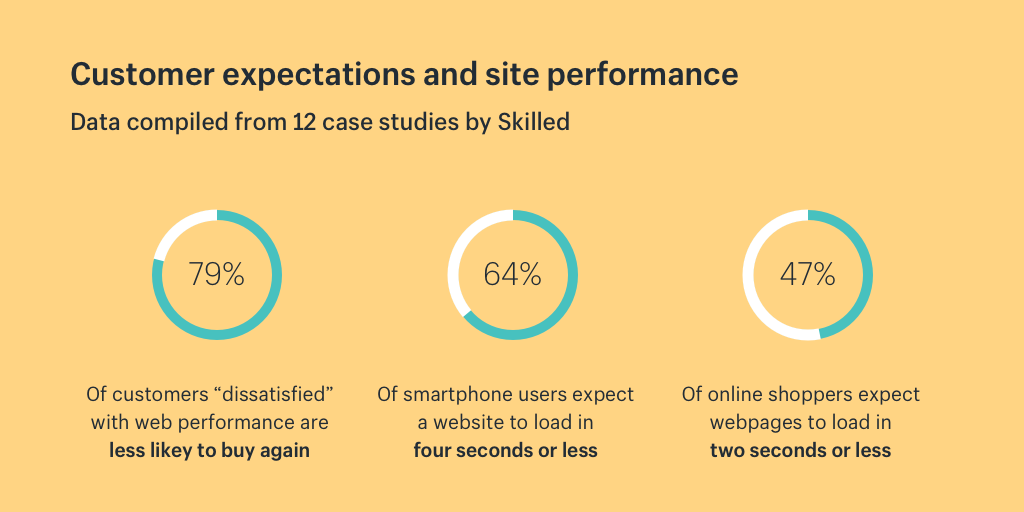
While there have been numerous hints leading up to it and we’ve been preparing clients for it, Google has officially announced site speed as an Atlanta SEO ranking factor. Users want results and they want them fast. Site speed also drives higher conversion rates so it’s an investment that can make cents (see what I did there). – Jon Clark, Fuze SEO, LLC

11. Mobile Renaissance

The change from a desktop-based to a mobile-based Google index is imminent, requiring responsive design or better alignment between content on mobile and desktop sites. Google officially announced that page speed is a ranking factor for mobile results, making its AMP technology more appealing. Lastly, Progressive Web Apps will have greater support on iPhones, impacting mobile design trends. – Paul Shapiro, Catalyst, a GroupM and WPP Agency

12. Proliferation of Smart Devices

The one overall thing I can think of is the proliferation of smart devices like Alexa, Google Home and Apple Home Pod, in addition to the smart assistants on our devices like Siri and Google App. There is more natural language search and voice input going on, and it’s how one sets themselves up for Atlanta SEO success in a voice-driven search world. – Timothy Nichols,ExactDrive, Inc

These trends make it important to focus on long-term strategies that will keep Atlanta SEO Experts competitive in the year ahead.

 If you want to reinforce your strategy, also check the Atlanta SEO Tips to Rank your Articles Higher in Google

If you want to adapt your strategies to the 2018 SEO Trends, Contact Us, and our team of Atlanta SEO Experts will make you succeed in the year 2018 and beyond.

Did you like this article? Don’t forget to share it and follow us in Twitter and LinkedIn


San Diego On Site Tips for ECommerce

San Diego SEO On Page Tips Ecommerce

The search engine optimization (SEO) industry is still growing in popularity and is worth an astounding $65 billion. San Diego SEO helps stores rank in search engines like Google. With Google being the most visited website in the world, ranking high in search can bring your online store a ton of free traffic you can convert into sales. For this reason we show you this article by Oberlo with 8 useful On-Site SEO tips for your Ecommerce website.

San Diego SEO On Site Tips for Ecommerce.

On-site SEO can include tasks such as adding keywords to your titles, images, and url, adding multi-media such as images and videos throughout your content, internal linking, and updating your content regularly with new information.

Conduct keyword research.

You can use SEO optimization tools like Keyword Planner to find keywords. All you need to do is enter a keyword like ‘shoes’ and a list will populate of relevant keywords you can optimize for. The SEO optimization tool also lists the competitiveness of each keyword. Low competition keywords will be easier to rank for than high competition keywords. For product pages, you might choose to optimize for one keyword since there’s such little content on the page. However, for blog posts you might optimize for as many as 7 different keywords depending on the blog post length.

Keyword Research

Optimize your website for keywords.

Online store owners need to optimize their product pages, product collections, and blog posts. For product pages, you’ll want to include keywords in your product title and in your product description. For product collections, you’ll want to include some copy describing the collection so that you can rank organically for it. Your blog posts should be optimized to rank for 3 or 4 relevant keywords. You do this by incorporating the keyword in at least 1% of the copy but under 2%. There are some SEO optimization tools you can use to ensure you’re hitting the right percentage. San Diego SEO recommends to also check Free SEO Audit tools. Also, you can use Google Keyword Planner to determine the best keywords to use.

Optimize ECommerce Keywords

Update your content.

Content freshness is when you update an older article to remove outdated content and add newer relevant content. Doing this to your older content helps you rank better in search. It’s best to do content freshness on your best performing articles. San Diego SEO recommends to update your content every 3-4 months. If you don’t blog on your store, you should consider doing it as it can drastically help your website rank better. If you’re against blogging, you’d need to update your website often. New products need to be added regularly and old products need to be removed as well.

ECommerce Content

Make your meta titles and descriptions actionable.

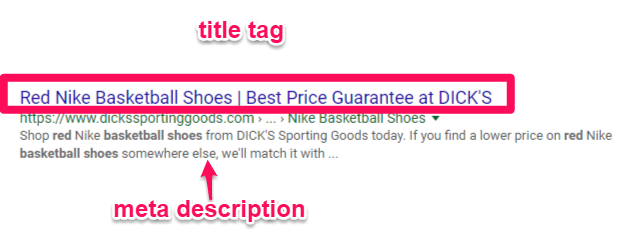
While it’s always great to have them optimized for keywords, you also want to optimize for clicks. Why should people click your link in search? For example, The Bay ranks high for ‘women’s pumps’ their meta description reads, “The hottest high heels, sexiest stilettos, prettiest pumps and cutest kitten heels can be found at Hudson’s Bay.” Who wouldn’t want to click that if they’re searching for new women’s pumps? For titles, listicles like ‘12 Ways…’ work really well for blog content. For product pages, the best titles are usually keyword optimized. Avoid giving your products names like ‘Sandra Heels’ which people wouldn’t search for organically.

Meta Description

Never change the URL.

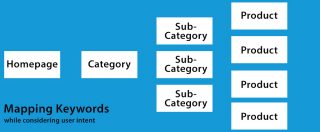
Changing the URL can cause broken links from sites that have given you backlinks. Be mindful of how you name your URL when creating it. For example, adding a number to your URL can be a bad idea. If you update a listicle with more sections the number will change and your URL will be outdated. Aim for a keyword focused URL. If you do change the URL be sure to use a 301 redirection so that you can keep some of the ranking power and backlinks from the previous page.

Mapping URL Keywords

Add internal links.

On blog posts, you can add links to product pages. On product pages, you might add recommended products. Your internal links need to make sense for the user to encourage them to click other pages of your store. Internal links can lower bounce rates. A bounce rate is a single page visit where your visitors leave without looking at other pages on the site. The closer to 100 the worse your bounce rate meaning that people are leaving your website after visiting that page. The goal is to have a low bounce rate under 40%.

Linking ECommerce

Monitor page speed.

San Diego SEO recommends to very so often monitor your store’s page speed. Large image sizes can slow down your page speed. It’s important to use resizing tools to compress big images to ensure faster speeds. You also don’t want to have too many apps on your homepage slowing your website down. Some store owners add several pop-up apps which can slow down the page speed on your website.

Page Speed ECommerce

Avoid duplicate content.

Many store owners often have duplicate content on their product pages. They’ll add the exact same sentences to every page for a special promotion. Add unique content on every page.

Duplicate Content

More tips.

Discover more about this topic in the article: Maryland SEO Expert Tips to Increase ECommerce Sales.


Do you want to increase your sales in your ECommerce Site? Contact Us, our San Diego SEO Experts know the best techniques to make you rank and boost your conversions. 

Did you like this article? Don’t forget to share it and follow us in Twitter and LinkedIn

content-marketing-international-markets

Content Marketing in Spanish for International Markets

Content Marketing International Markets

You’re killing it with your content marketing. You’ve created a veritable content marketing machine with a loyal audience, and you get what your readers want. But now your company is quickly expanding into new markets, and you’re tasked with creating content marketing in Spanish for a latino audience.

You’ve already invested time and energy into creating great content for your original market, so it makes sense to repurpose it for your new audiences. But if you think you can pull this off with copy, paste, and a little Google Translator, you’re sorely mistaken.

There are many challenges around marketing your company in a new region, including mastering a completely different language, or at least new slang; adopting a distinct cultural identity; adapting to unique ways of doing business; and understanding how your new audience relates to imagery and advertising.

Here are a few tips from Sprinklr for taking your local content marketing strategy global.

Scrap your assumptions about your audience.

Any solid marketing strategy begins with thorough customer research. Still, in the rush to enter a new market, it can be tempting to gloss over this step or assume that your new audience has the same desires and pain points as your existing customer base. After all, they’re buying the same product, so their needs are the same, right?

Not exactly; the reality is much more nuanced, and it’s important to conduct thorough market research before translating your content marketing in Spanish.

Begin by sussing out the competition in your target country or region. Understand who your biggest competitors will be and evaluate their marketing strategy. What does their website look like? Do they blog frequently? What topics do they cover? Are they on social media? If so, which platforms do they use and what are they posting?

Flag their most successful content marketing in Spanish, including blog articles and social media posts, and try to understand why they worked well—the comments section of a post can be a big help here. This will give you key insights into what your audience responds to and how you can replicate this type of success in your marketing.

Also, begin to understand how your new audience uses the internet. Do they spend more time browsing the web on desktops or smartphones? Which social media platforms do they engage with most? To get a big picture perspective on how your audience is likely to consume your content, look into the following:

  • Demographics, including age and socioeconomic status.
  • Unique habits or idiosyncrasies when it comes to technology use. For example, people in China tend to use fake names online and avoid filling out forms because they do not want to be contacted by sales people.
  • Favorite apps (in addition to social media platforms).
  • Content consumption habits (do they spend more time with video, articles, podcasts, or slide decks?).

Hire a local team of marketers that truly get the culture.

We’ve all heard horror stories about branding campaigns that translated poorly to other languages. When written in English, your tagline may be charming or clever, but translate it word-for-word into content marketing in Spanish, and all of a sudden you’re talking about something completely different.

Writing for another country or language takes more than just a good turn of phrase and basic translation skills—it takes a top-notch writer who is fully bilingual and who can take your content and rework it to match the needs of your new audience. In addition to being a skilled writer, your new copywriter must understand the ins and outs of marketing in the region and how to reshape content to appeal to that unique culture.

Ideally, you’ll start with a small full-time marketing team in your new region that includes at least one skilled content marketer. If this isn’t an option, you can search for copywriters in that region through LinkedIn or by posting on a local freelance website.

Create a content marketing in Spanish library.

The logistics of repurposing content for another market can be complicated. With multiple marketing teams working in a range of countries, you’ll undoubtedly have emails flying around about where to find original image files and editable text documents.

As your company grows, it becomes increasingly important to develop a system for managing and distributing content across teams and borders. . 

Think global.

When adapting your existing content marketing assets to international markets, it’s important to conduct comprehensive market research, hire skilled writers with a native command over the local language, and maintain your brand identity through content marketing in Spanish.

Are you interested in creating content marketing in Spanish?  Contact Us, our  International SEO Consultants  will plan the best content marketing in Spanish strategy for your business.

{{cta(’56ab2f7a-dc3d-4f0c-ba4b-d8b9c6f32802′)}}

Did you like this article? Don’t forget to share it and check more content in Twitter and LinkedIn.

You may also like: